



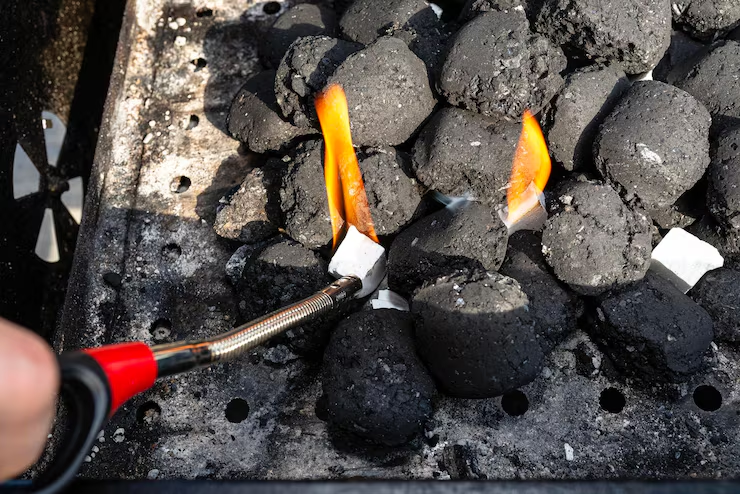
In today’s world, where sustainability and environmental responsibility are becoming global priorities, people are increasingly searching for greener alternatives in their daily lives. One area that has seen a growing shift is cooking fuel. Among the various renewable energy solutions, eco cooking with coconut charcoal is emerging as one of the most reliable, clean, and eco-friendly options. Derived from discarded coconut shells, this renewable fuel not only reduces waste but also delivers excellent performance for cooking, grilling, and even industrial applications.
Why Choose Eco Cooking with Coconut Charcoal
Traditional fuels such as wood charcoal and firewood are known to contribute to deforestation, air pollution, and health problems caused by excessive smoke. On the other hand, coconut charcoal is made from agricultural byproducts that would otherwise go to waste. By reusing coconut shells, communities reduce environmental pollution and help preserve forests.
Another major advantage of eco cooking with coconut charcoal is its low carbon footprint. The production process uses waste biomass, making it a renewable fuel that aligns with sustainable development goals. For environmentally conscious households and businesses, this choice is both practical and responsible.
Key Benefits of Eco Cooking with Coconut Charcoal
The popularity of coconut charcoal is not only due to its sustainability but also its superior cooking performance. Here are some of the most important benefits:
-
Longer burn time – Coconut charcoal burns longer than traditional charcoal, making it ideal for extended cooking sessions.
-
High and steady heat – Its dense structure provides consistent heat output, ensuring food is cooked evenly.
-
Low ash content – Minimal ash production means cleaner cooking and easier cleanup.
-
Smokeless and odorless – Perfect for indoor cooking, barbecuing, or shisha use, as it does not release harmful smoke or unpleasant odors.
These qualities make coconut charcoal the preferred choice for restaurants, caterers, and households that want efficiency without compromising on eco-friendliness.
Economic and Social Advantages
Adopting eco cooking with coconut charcoal also has significant economic benefits. In coconut-producing countries, farmers and small entrepreneurs gain new income opportunities by supplying shells or producing briquettes. This supports local economies and reduces agricultural waste.
For consumers and businesses, coconut charcoal is cost-effective in the long run. Since it burns longer and produces more heat, fewer briquettes are needed compared to wood charcoal. This reduces overall fuel expenses, making it an economical solution for families and commercial kitchens alike.
Versatile Applications of Coconut Charcoal
One of the most remarkable aspects of coconut charcoal is its versatility. It can be used for:
-
Home cooking and grilling – Providing steady heat for barbecues and daily meals.
-
Restaurant kitchens – Ensuring consistent cooking quality and saving fuel costs.
-
Hookah and shisha lounges – Its odorless, smokeless burn creates a pleasant and smooth experience.
-
Industrial heating – Serving as a cleaner and renewable substitute for coal in boilers and furnaces.
This wide range of applications shows that coconut charcoal is not just a household solution but also a reliable option for large-scale energy needs.
Supporting the Global Green Movement
Every time someone chooses eco cooking with coconut charcoal, they are contributing to the reduction of deforestation, waste, and carbon emissions. Governments and environmental organizations worldwide are promoting the adoption of renewable biomass fuels as part of efforts to achieve climate goals.
For those interested in exploring high-quality options, you can learn more at coconut briquettes cooking energy, a valuable resource for eco-friendly fuel solutions.
Conclusion
The movement toward sustainability starts with everyday choices, and eco cooking with coconut charcoal is a perfect example of how small changes can make a big impact. With longer burn times, high heat efficiency, and environmental advantages, coconut charcoal is transforming the way people cook at home, in restaurants, and even in industries. Affordable, renewable, and versatile, it is a solution that benefits both people and the planet. Choosing coconut charcoal for cooking is more than a trend—it is a step toward building a cleaner and greener future.