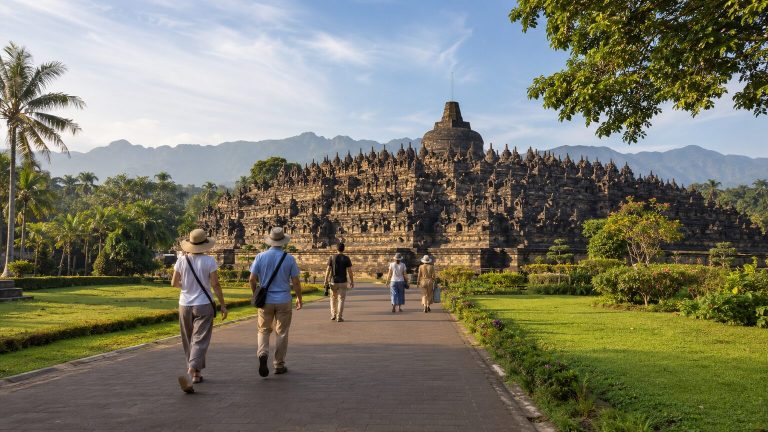




The Borobudur World Heritage History reflects the remarkable journey of an ancient Buddhist monument from its creation in Java to its recognition as a global cultural treasure. Located in Central Java, Indonesia, Borobudur represents the achievements of ancient architecture, Buddhist philosophy, and Javanese civilization.
Built during the Sailendra Dynasty around the 8th and 9th centuries, Borobudur has experienced many historical changes. The temple was once a major Buddhist pilgrimage site before becoming forgotten and later restored as a world heritage monument.
The Ancient Origins of Borobudur
Borobudur was constructed during the peak of the Sailendra Dynasty. The builders created the monument as a sacred Buddhist site that represented the journey toward enlightenment.
The temple follows Mahayana Buddhist concepts through three symbolic levels: Kamadhatu, Rupadhatu, and Arupadhatu. Each section represents different stages of spiritual development.
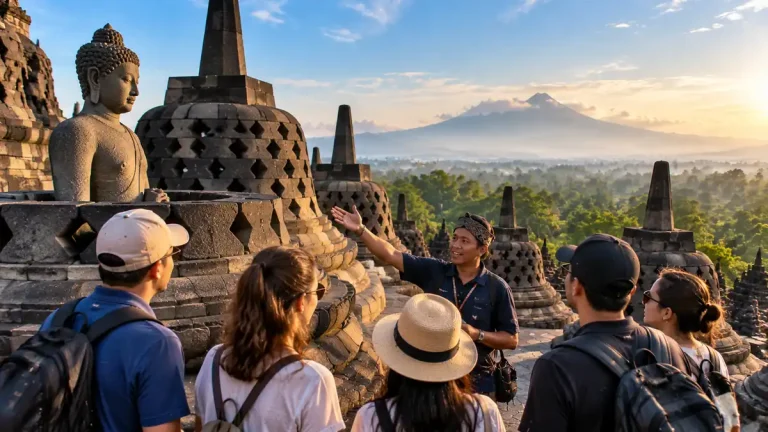
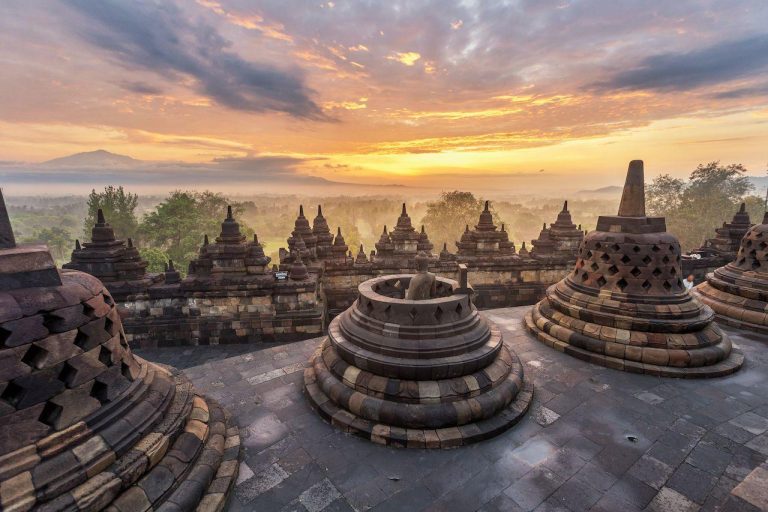
Millions of volcanic stone blocks were arranged carefully to create terraces, stairways, stupas, and detailed relief panels. The design demonstrates the advanced engineering knowledge of ancient Javanese society.
Visitors can discover more about the temple’s background through Borobudur Temple history, origins, rediscovery, restoration, and legacy.
Rediscovery and Restoration Journey
After centuries of abandonment, Borobudur gained attention again in the early 19th century. The monument was rediscovered during the British administration of Java.
Thomas Stamford Raffles encouraged the exploration of the hidden temple in 1814. Researchers later documented its architecture and historical importance.
However, Borobudur faced serious preservation challenges. Weather conditions, vegetation growth, and water damage affected the stability of the structure.
Large restoration efforts were later conducted to protect the monument. The Indonesian government worked with UNESCO between 1975 and 1982 to restore and preserve Borobudur.
Borobudur as a UNESCO World Heritage Site
Borobudur received international recognition when UNESCO designated it as a World Heritage Site in 1991. This status highlighted the temple’s outstanding cultural value.
UNESCO recognized Borobudur because of its exceptional Buddhist architecture, artistic achievements, and historical importance. The monument represents a unique combination of indigenous Javanese traditions and Buddhist beliefs.
The recognition also increased global awareness of Borobudur. Researchers, travelers, and cultural organizations began paying greater attention to its preservation.
The Importance of Borobudur’s Heritage Value
Borobudur is more than an ancient structure. The temple provides valuable information about the religious, social, and artistic development of ancient Java.
Thousands of relief panels display Buddhist stories, moral teachings, and scenes from daily life. These carvings help researchers understand the culture of the people who created the monument.
The temple also remains an important spiritual destination. Buddhist pilgrims and visitors from different countries continue to explore its meaning.
Protecting Borobudur for Future Generations
Today, conservation teams continue monitoring Borobudur to maintain its condition. Preservation efforts focus on protecting the stone structures, reliefs, and surrounding environment.
Tourism management also plays an important role. Visitors must follow conservation guidelines to reduce damage and maintain the monument’s authenticity.
Travelers who want to experience this historic site can join a Borobudur Temple tour to explore its architecture, history, and cultural significance.
Conclusion
The Borobudur World Heritage History shows the extraordinary transformation of an ancient monument into a globally recognized cultural symbol. From its construction during the Sailendra Dynasty to UNESCO recognition, Borobudur continues to represent Indonesia’s rich heritage.
Understanding its history allows visitors to appreciate the temple beyond its beauty. Every terrace, relief, and stupa tells a story of spirituality, creativity, and preservation.